Imposter Up - Who is the Spy?
- 4.8
- Rating
- 10.00M
- Installs
- Free
- Price

 Analysis by App-foxy
I tried Imposter Up - Who is the Spy? as the kind of game you open when several people are sitting together and nobody wants to learn a complicated rulebook. Its central idea is easy to understand: players try to work out who is hiding a different role, while the person with the unusual role attempts to stay unnoticed. That makes it a natural fit for family gatherings, casual parties, and evenings with friends where conversation matters as much as winning.
This is a free word game from Cosmicode, rated for Everyone. It has built a large audience, with more than ten million installs and a 4.9 average from roughly forty-one thousand ratings. Those figures suggest that the basic concept is landing well with players, but they do not replace the more important question: will your particular group enjoy the way it creates suspicion and discussion? In my experience, the answer depends less on gaming skill and more on whether everyone is comfortable speaking up and bluffing a little.
What to expect when the game begins
The first thing to understand is that this is not a solo word puzzle in the usual sense. You are not mainly competing against a timer, a dictionary, or a fixed set of clues. The fun comes from reading people. A round works best when players listen carefully, choose their words, and avoid making their own role too obvious.
You May Also Like

 AccuWeather: Weather Radar
AccuWeather Review: A Quick, Clear Forecast for Everyday Decisions
For everyday plans, the best forecast is the one you can understand quickly. AccuWeather makes rain timing, radar, and local conditions easy to act on, with a few trade-offs.

 Hill Climb Racing
Why Hill Climb Racing Still Turns Crashes Into One More Run
A tiny car, a bumpy hill and one more upgrade: Hill Climb Racing keeps resurfacing because its simple chaos makes every near-miss feel personal.

 AliExpress - Shopping App
AliExpress Makes Global Shopping Feel Personal, but Shoppers Bear the Risk
AliExpress turns a global marketplace into a pocket-sized discovery engine. Its reach is useful, its shopping loop compelling, and its trade-offs easy to miss.

 Lords Mobile: Kingdom Wars
Lords Mobile Is a Kingdom-Building Routine, Not a Quick Match
A case-by-case verdict on the building, battles, device demands, and social commitments that make Lords Mobile rewarding for some players and exhausting for others.

 PDF Scanner app - TapScanner
TapScanner Makes Paperwork Easier to Capture, Check, and Share
TapScanner makes scanning with a phone feel less like a rescue operation and more like a dependable step in getting work done. Its capture tools are useful, though not flawless.

 Block Blast!
 Shows How Much a Puzzle Game Can Leave Out
A quiet grid game shows why puzzle players increasingly value instant clarity, repeatable skill and low-pressure play—and where the genre still needs to catch up.
More From Our News Desk
View All News


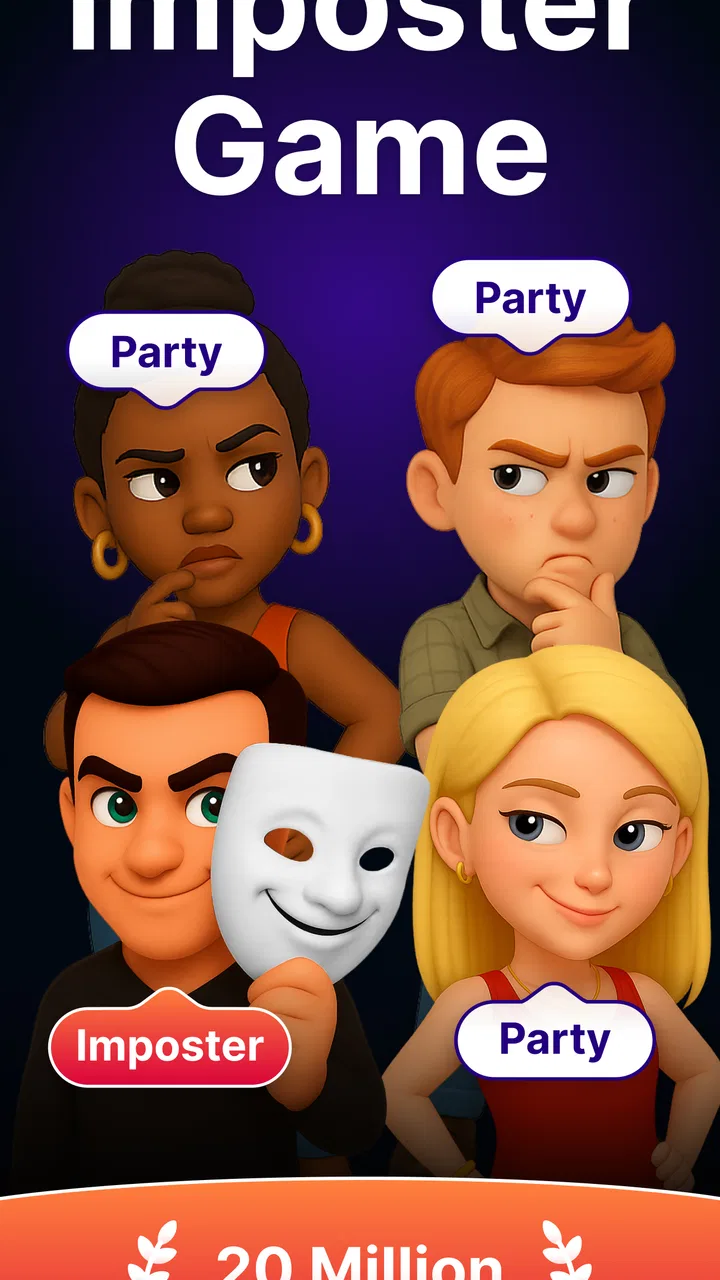
The title points toward the two ideas that shape the experience: an impostor and Mr White. Rather than treating the game like a traditional crossword or an individual guessing challenge, you should expect a social deduction session in which information is deliberately uneven. Some players can speak from a stronger position, while another player has to improvise and learn from the conversation.
That uneven information is what gives the game its tension. A player who answers too vaguely may look suspicious, but a player who gives away too much can also expose the hidden answer. The best rounds are not necessarily the loudest ones. They are the rounds where a short, carefully chosen response creates several possible interpretations and keeps everybody uncertain.
I would not install this expecting a deep campaign, a long-term character system, or a traditional progression path. Its value is in replaying the social situation with different people and different conversations. If your group enjoys talking, accusing, defending, and laughing at bad guesses, it has a clear purpose. If you prefer quiet, private word challenges, another game in the category will probably suit you better.
The free entry point is helpful because it lets a group test the idea without committing money first. There are in-app purchases ranging from $4.99 to $29.99 per item, so I would treat optional spending as something to consider only after your group knows it will return to the game. For a first session, the important decision is not what to buy; it is whether the basic social loop produces enough conversation to keep everyone involved.
Why the audience matters more than the device
On a phone or tablet, the game is convenient to pass around, but the screen is only one part of the experience. The real “board” is the group sitting together. That means the same round can feel brilliant with six confident friends and awkward with people who do not know one another well.
For families, the Everyone rating makes the game approachable across age groups, although younger players may need the rules explained slowly and may find bluffing less comfortable than adults. For a group of friends, the game becomes more entertaining when people already understand each other’s habits. Someone who always gives a safe answer can become suspicious simply because the group knows that pattern.
It is also worth deciding before starting whether your group wants a relaxed or competitive mood. Social deduction games can turn a harmless accusation into a personal argument if players forget that the suspicion belongs to the role, not the person. I found that a quick agreement to keep accusations playful makes the experience smoother, especially when children or mixed-age players are involved.
Getting through setup without losing the room
The current version is 1.3.13 and runs on Android 7.0 or later. Once it is installed, I recommend opening it before everyone gathers, not because the game is difficult to start, but because a party game loses energy when the first several minutes are spent troubleshooting a device or explaining where to tap.
Before launching a round, choose one device that can be comfortably seen by the group. A phone is portable, but passing it around too quickly can make private information feel less private. Put it on a table or hold it at a consistent angle, and ask players to check their role one at a time. That small habit prevents accidental reveals and stops the opening from becoming chaotic.
The first setup decision is really about the people, not the settings. Count who is actually ready to play, explain that everyone should pay attention to the words used during the round, and make sure nobody is reading notifications or holding a side conversation. A distracted player can miss the information needed to make a sensible accusation, then blame the game for confusion that came from the room.
I also suggest naming a simple speaking order before the first round. It does not matter whether you go clockwise or choose randomly; what matters is that nobody interrupts the first speaker and that each person gets a fair chance. A fixed order makes the game easier for first-time players because they can concentrate on the clues instead of wondering when they should talk.
Do not over-explain every possible situation before playing. Give the group the basic objective, demonstrate how a careful answer can be useful, and begin. The rules become clearer after one complete round. Long explanations create a different problem: players remember the theory but still do not know how the conversation should feel in practice.
The safest way to handle private information
Because the game depends on hidden roles, device handling is more important here than in an ordinary word game. I would avoid letting one player scroll casually while another is looking away. Pass the device deliberately, let the current player read what they need, and return it to the same place.
This is also why a group should not start while people are entering and leaving the room. A late arrival can hear part of a conversation and unintentionally gain an advantage, while a player who steps away may miss the context needed to judge the answers. A short round is better when everyone remains present from the first reveal to the final decision.
For a family gathering, I would make one person the round organizer. That player can keep the device steady, remind everyone of the speaking order, and settle basic questions without taking over the accusations. For a party of friends, rotating that responsibility works well because it prevents one person from becoming the permanent referee.
Your first meaningful success
A successful first round is not necessarily one where you identify the hidden player immediately. For a newcomer, success means giving an answer that fits the conversation without making your own position obvious. If you have a normal role, resist the temptation to prove that you know more than everyone else. If you are the player working with less information, listen for patterns before speaking.
My most useful beginner tip is to answer specifically enough to sound informed, but not so specifically that you reveal the exact thought in your head. A broad response can look like guessing, while an overly precise response may hand the hidden player a perfect clue. The middle ground gives the group something to discuss and gives you room to adjust later.
When it is your turn, listen to the answers that came before yours. Do not prepare a response in isolation. The same word can have a completely different effect after three other players have already narrowed the topic. A good answer should connect naturally to the conversation, yet remain defensible if the group later questions you.
If you suspect someone, do not announce the accusation too early unless the round clearly calls for it. First compare the person’s wording with the others. Are they being unusually general? Are they copying the direction of the conversation without adding anything? Are they too confident about a detail that nobody else has mentioned? These are stronger signals than simply disliking an answer.
If you are the hidden player, your best move is often to ask yourself what a normal participant could reasonably say at that moment. Trying to be mysterious can be more revealing than giving an ordinary answer. Pay attention to the level of detail used by the group and match that level rather than forcing a clever performance.
A realistic first-session example
Imagine four friends playing after dinner. One person gives a cautious answer, another responds with a very specific detail, and a third says something so broad that it could fit almost anything. The natural reaction is to suspect the broad answer, but that may be a trap. The specific response could also be suspicious if it pushes the conversation toward information the hidden player needs.
In that situation, I would not vote based on the first impression. I would ask which answer fits the previous clues without making the topic obvious. The cautious player may simply be protecting a normal role, while the broad player may be trying to survive. The point is not to find a magical tell; it is to compare how each person manages limited information.
That approach gives first-time users a concrete path to improvement. After the first round, ask which answer changed the group’s direction and which answer merely repeated what had already been said. The strongest lesson usually comes from that discussion, not from the result alone. A player who was accused unfairly can explain what they meant, and everyone becomes better at judging intent rather than tone.
Where beginners commonly get confused
The biggest confusion is treating the game as if there were one correct way to speak. There is not. A short answer is not automatically suspicious, and a confident answer is not automatically trustworthy. The game is built around uncertainty, so a good round will contain several plausible explanations for what people say.
Another common mistake is assuming that the loudest player is controlling the game. A confident speaker may simply be comfortable in social situations, while a quieter player may be paying closer attention. I found it more reliable to examine the sequence of answers and the changes in behavior than to judge volume or enthusiasm.
New players can also reveal too much because they want to demonstrate that they understand the topic. That instinct is understandable, but it removes the need for deduction. A better habit is to offer one useful connection and stop. Let other players contribute before adding another layer.
On the other hand, refusing to say anything meaningful is not a safe strategy. If every answer is vague, the group has no material to compare, and the round becomes a contest of personal suspicion. Even when you are uncertain, give the group a real clue about your interpretation without making the hidden information obvious.
Players sometimes expect the app to resolve every social disagreement for them. It can organize the hidden-role setup, but the interesting part still happens between the people in the room. If two players argue about whether an answer was fair, pause and clarify the intended reasoning rather than turning the disagreement into a technical complaint.
How to make repeated rounds feel different
Replay value comes from changing the group’s behavior, not from rushing through identical conversations. In one round, encourage concise answers. In another, allow a little more explanation. You can also rotate who speaks first, because the opening answer often influences how everyone else interprets the situation.
A particularly useful variation is to ask players to explain their final suspicion after the result. This turns a lucky guess into a lesson. Did the accused player use wording that did not match the group? Did somebody follow another answer too closely? Did the group overlook a quieter person? These observations help experienced players improve without requiring a formal tutorial.
For mixed-age groups, keep the discussion focused on the words rather than personal habits. Children may be accused because they speak differently, while adults may be trusted simply because they sound confident. Encouraging players to point to a specific answer makes the game fairer and teaches better reasoning.
For close friends, the opposite problem can appear: everyone knows everyone’s usual style. In that case, deliberately changing the speaking order or asking players not to imitate their normal joking manner can make the deduction less predictable. The goal is not to create artificial complexity, but to stop the same person from being identified for the same reason every time.
Who should play it and who should choose something else
I think this game is a strong choice for people who want a quick, conversation-led party game that can involve a whole room. It is especially suitable when the group has mixed gaming experience. Nobody needs to understand complicated controls, and a player who rarely plays mobile games can still contribute immediately through observation and language.
It also works well as a break between larger activities. You can use it after a meal, while waiting for other guests, or during a family evening when people want something more active than watching a screen but less demanding than a full board game. The phone provides the hidden information, while the group supplies the entertainment.
I would be more cautious about recommending it to someone who normally plays word games alone. Traditional word puzzles reward vocabulary, memory, and personal concentration. This game rewards timing, social awareness, and the ability to interpret ambiguous statements. If you want to sharpen spelling or solve a puzzle privately, a conventional word app is a better match.
It may also be the wrong choice for groups that dislike bluffing or public suspicion. Some people find it tiring to defend an innocent answer, and others do not enjoy accusing friends even when the rules make it harmless. In that setting, a cooperative word game would create less friction and probably produce a better evening.
Compared with a standard guessing game, this one gives every participant a reason to watch the entire conversation rather than waiting for a personal turn. Compared with a traditional board-based social deduction game, it is lighter to set up and easier to carry, but it offers less physical presence and may feel dependent on the device. That trade-off is worthwhile when convenience matters more than cards, tokens, or a large table layout.
The developer, Cosmicode, has positioned the experience around a simple party premise rather than a complex competitive system. That simplicity is an advantage for first-time groups, but it also means the people playing must create much of the variety. If your group refuses to discuss answers or repeats the same safe tactics, the game can become predictable faster than a richer tabletop alternative.
My recommendation after learning the rhythm
After the first round, I would not judge the game solely by whether you won. Judge it by whether people wanted to talk about the result and try again. That reaction tells you more about its fit than the rating or install count. A good session leaves players debating whether a suspicious answer was clever, lucky, or simply misunderstood.
The free download makes experimentation easy, and the Everyone rating keeps it accessible for a broad household audience. The optional purchases are worth approaching carefully: wait until your group has completed enough rounds to know whether it will become a regular party choice. There is no reason to spend immediately just to understand the central experience.
For a first-time user, my recommended path is simple: prepare one shared device, explain the hidden-role idea in plain language, establish a speaking order, and play one complete round without trying to perfect every rule. On the second round, focus on listening before speaking. On the third, change the order or the style of answers so the group does not rely on one obvious pattern.
My final view is positive, with a clear condition. Imposter Up - Who is the Spy? is at its best when you want a compact social word game that turns ordinary conversation into deduction. It is not a replacement for a solo puzzle or a deep strategy game, and it will not rescue a group that does not enjoy talking. But with the right people, a steady device routine, and a willingness to give clues without giving everything away, it offers an approachable way to get everyone involved.
The most important tip I can leave you with is this: play the conversation, not just the accusation. Listen for what each answer adds, notice who adapts when the discussion changes, and remember that uncertainty is the point. Once your group understands that, the first awkward round usually becomes the beginning of the fun rather than a reason to quit.
FAQs for Imposter Up - Who is the Spy?
01What is the main objective of Imposter Up - Who is the Spy?
Imposter Up - Who is the Spy? is a social deduction game where the main objective is to identify the spy among the players. Participants must complete tasks and gather clues while avoiding being eliminated by the spy. The game tests your skills in observation, strategy, and deception.
02Is Imposter Up - Who is the Spy? suitable for children?
Imposter Up - Who is the Spy? is generally suitable for older children and teens, as it involves strategic thinking and deception. However, parents should review the game’s content and themes to ensure they align with their family’s values, as some younger players might find the concept of deception challenging.
03Does Imposter Up - Who is the Spy? require an internet connection?
Yes, Imposter Up - Who is the Spy? requires an internet connection to play, especially if you want to engage in multiplayer mode. The online connectivity allows players to interact with others in real-time, enhancing the social and interactive aspects of the game.
04Are there any in-app purchases in Imposter Up - Who is the Spy?
Imposter Up - Who is the Spy? offers various in-app purchases. These may include character skins, game modes, or other enhancements that can improve your gaming experience. While the game is free to download, these optional purchases can provide added fun and customization options.
05How can I improve my skills in Imposter Up - Who is the Spy?
To enhance your skills in Imposter Up - Who is the Spy?, focus on observing other players’ behaviors and patterns. Practice strategic thinking and communication to make convincing arguments when accused or accusing others. Engaging in regular gameplay will also help you better understand game mechanics and improve your deduction skills.
Pros
- Engaging multiplayer experience.
- Simple and intuitive controls.
- Variety of character skins.
- Quick matchmaking times.
- Frequent updates and new features.
Cons
- Ads can be intrusive at times.
- Limited map selection.
- Occasional connection issues.
- Lacks offline mode.
- In-app purchases for customization.

Imposter Up - Who is the Spy?
Gallery